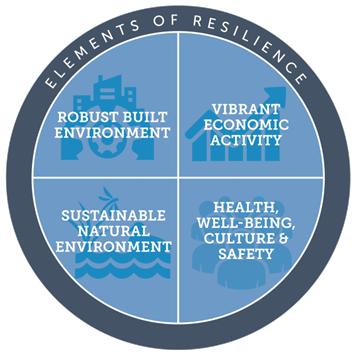
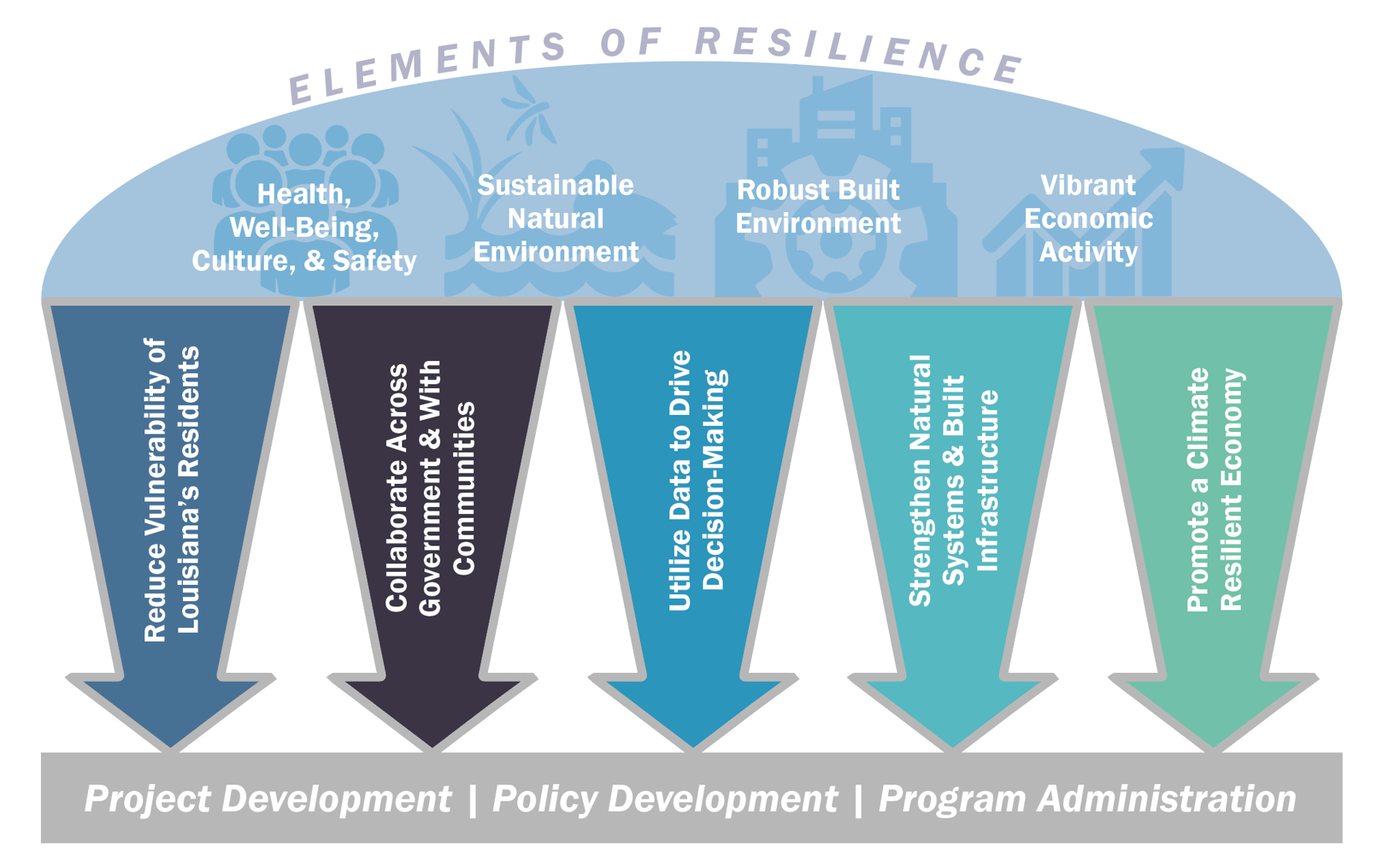
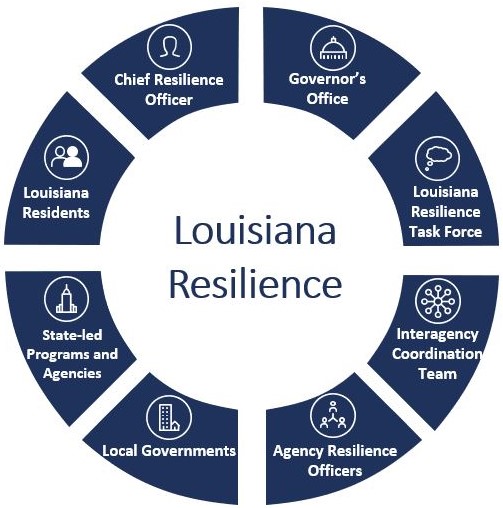
In 2020, the Governor joined ten other states by authoring an executive order naming a Chief Resilience Officer to advance a cross-agency, holistic approach to the challenges and opportunities associated with the impacts of environmental hazards in Louisiana’s coastal area. During the 2023 Regular Legislative Session, House Bill 526 was adopted and signed into law as Act 315 which built on that work by establishing the position of Chief Resilience Officer within the Office of the Governor by statute and with the mandate to take this cross-government approach to resilience statewide and in response to all of the environmental hazards the state and its communities are facing. Act 315 defines resilience as something inherently multi-dimensional when looked at in total and also made up of pieces that can be used to organize conversations or collaborations among smaller groups of stakeholders who may share a common language or a shared collection of missions.
State Agency Actions
In addition to statewide priorities and updates, Act 315 also calls for individual state agencies to report out on their progress building resilience. Beginning in 2024, resilience officers will help lead their agency through the development of strategic resilience plans that grapple with the essential question,
“How does the changing climate affect the programs, assets, and services offered or owned by your department today and in the future?”
Armed with the knowledge of where the impacts are most critical, adaptation options can then be pursued either individually or together with others.
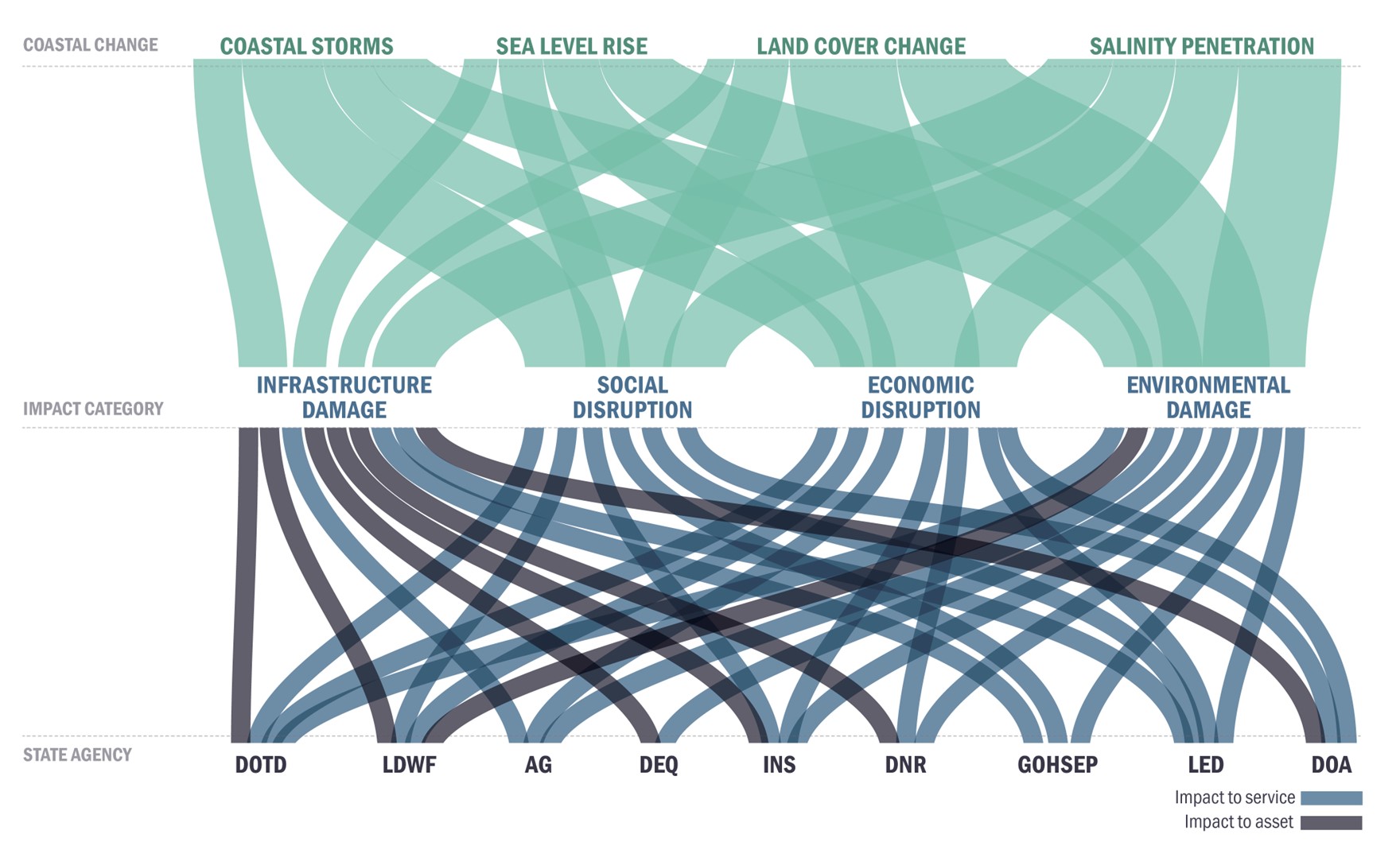
Operating under Executive Order 2020-19 on Coastal Resilience, the Adaptive Governance Initiative worked with state agencies to conduct vulnerability assessments, plan adaptation options, and report on priorities related to the impacts of coastal change that can be replicated statewide and across more hazards.
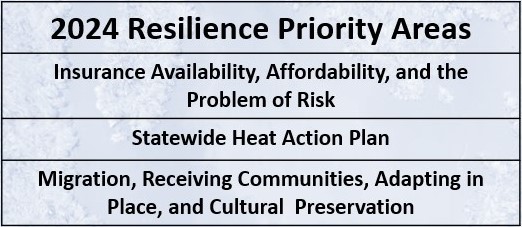
Additionally, the 2024 Resilience Priority Issues are: